It always starts with good intentions. A quick rinse, a cleaner driveway, a patio that finally looks “new” again. Then the pressure hits wrong, and suddenly you have etched concrete, scarred stucco, stripped paint, or paver joints that look washed out. Add slippery algae near the pool, and it stops feeling cosmetic fast.
Understanding the difference between power washing and soft washing can save you hundreds in surface repairs. Power washing uses high-pressure water—typically 1,500 to 3,000 PSI for residential work—to blast away compacted dirt from tough surfaces like concrete. Soft washing takes the opposite approach: low pressure (usually under 500 PSI) paired with biodegradable cleaning solutions that break down organic growth without mechanical force.
At W.A.S. Landscaping, we’ve seen what works across San Diego neighborhoods and what backfires when the wrong method gets used on the wrong surface. In this guide, we’ll help you choose the right approach so you can protect the finishes you’re paying to keep looking good.
Power Washing vs Soft Washing: What’s the Actual Difference?
If your driveway looks dull, your patio feels slick, or your stucco has that stubborn film that keeps returning, it helps to know this upfront: the safest clean is the one that matches the surface, not your urge to “blast it off.”
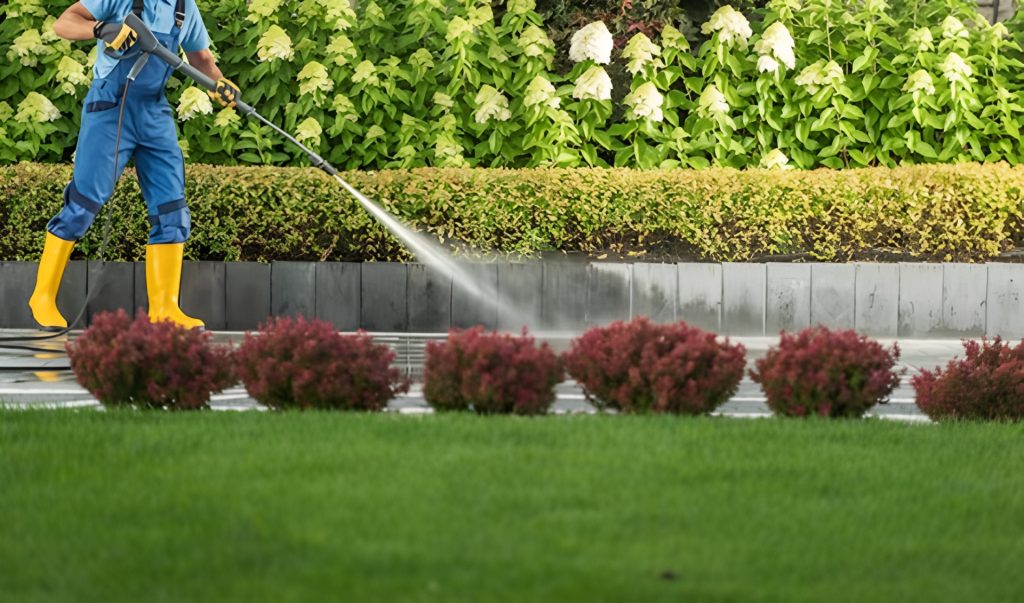
When comparing soft washing vs pressure washing, you’re really choosing between two philosophies: chemistry-forward cleaning with a gentle rinse, or pressure-forward cleaning with lighter chemical support. For mildew and algae, chemistry usually wins. For compacted dirt on concrete, controlled pressure can be more efficient.
PSI Made Simple: How Pressure Levels Compare
PSI (pounds per square inch) measures how much force a pressure washer delivers—and that number tells you whether the machine is appropriate for the surface you’re cleaning. Industry sources and equipment manufacturers consistently recommend the following ranges:
| Method | Typical PSI | How It Works |
| Soft washing | 100–500 | Cleaning solutions do the heavy lifting; low-pressure rinse removes residue without mechanical force. |
| Light pressure wash | 500–1,500 | Moderate stream for lightly soiled pavers, fencing, and some siding. Still paired with detergent. |
| Standard pressure wash | 1,500–3,000 | Full-force cleaning for concrete driveways, walkways, and durable hardscapes. Nozzle choice matters. |
That difference matters because higher PSI can cut through buildup fast—but it can also cut into the surface if you overdo it. That’s why pressure washer PSI ratings and equipment basics matter more than most people think.
A Friendly Warning Before You Crank the Pressure Up
Too much pressure can etch concrete, scar stucco, tear screens, or push water behind trim and around windows. Stucco is especially vulnerable: most professionals recommend staying between 1,200 and 1,500 PSI with a wide 40-degree nozzle to avoid cracking or pitting the finish. Soft washing reduces that risk, but it still requires careful product choice, proper dwell time, and a thorough rinse to protect nearby landscaping.
Before You Wash Anything: Know What Your Surfaces Can Handle
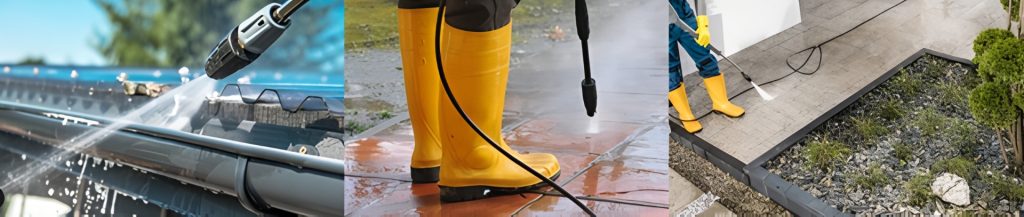
Every surface has a breaking point, and the smartest clean starts with what your home is actually made of. With house power washing in San Diego, you can get great results—but only when pressure is matched to materials that can take it without scarring.
| Surface | Best Method | Safe PSI Range | Watch Out For |
| Concrete driveways | Power washing | 1,800–3,000 | Etching if you stay in one spot too long |
| Pavers | Power washing (low end) | 1,000–1,500 | Joint sand blowout; reseal after cleaning |
| Stucco exteriors | Soft washing | Under 1,500 | Pitting, cracking, and lifted paint |
| Roof tile | Soft washing | 100–500 | Granule loss on asphalt; cracked tile edges |
| Painted siding | Soft washing | Under 1,500 | Oxidation marks and stripped paint |
| Wood / vinyl fencing | Soft washing | Under 1,000 | Splintering, warping, discoloration |
| Retaining walls / stone | Power washing | 1,000–2,000 | Varies by stone type; test first |
If you’re dealing with power washing siding, stucco pitting and lifted paint are real risks—which is why a soft washing service in San Diego is usually the better match for any painted or coated exterior.
When soft washing a house, the cleaning solution and dwell time do the heavy lifting, and a gentle rinse finishes the job. That’s also why soft house washing tends to leave fewer surprises than going in with full pressure.
Roof soft washing in San Diego is often the only safe route for tile and asphalt shingles. The Asphalt Roofing Manufacturers Association has warned that excessive pressure strips protective granules and can shorten a roof’s lifespan by years.
Runoff matters too. Roof and wall rinsing can hit plants and garden beds, so protection and responsible rinsing are part of doing exterior power washing right. If you’re planning broader upkeep, you can also see our full-service options and line up everything in one visit.
Why San Diego Homes Need Washing More Often Than You’d Expect
Grime doesn’t build up here the same way it does in colder, wetter climates. Between coastal air and year-round outdoor living, surfaces get a mix of salt residue, dust, and organic growth that can sneak up fast—especially if you manage multiple properties.
San Diego’s Grime Buildup Trifecta
Coastal salt and marine layer residue leave a dull, clingy haze on everything from windows to walkways. Year-round sun bakes stains into porous concrete and pavers, making them harder to remove the longer they sit. And anywhere you combine shade with irrigation overspray—north-facing walls, covered patios—you get algae and mildew pockets that spread quietly.
From La Jolla and Torrey Pines down through Clairemont and North Park, it’s the same story: slippery walkways, mildew-spotted stucco, and weathered patios or pool decks that all sneak up between seasons.
When It Becomes Impossible to Ignore
Most homeowners reach for power washing services in San Diego right before hosting outdoors, during HOA inspections, or ahead of pre-sale prep and listing photos. For mildew and algae, soft washing is often the safer path because it treats the growth chemically instead of trying to blast it away.
And since runoff rules matter here: under San Diego Municipal Code §43.0304, it is illegal to discharge polluted wash water into the storm drain system, with penalties up to $10,000 per day per incident. A responsible contractor contains, captures, and properly disposes of all wash water—not just the visible stuff.
If you’re already doing seasonal upkeep, pairing exterior cleaning with routine maintenance saves headaches later—especially when you bundle it with routine lawn mowing services.
What Power Washing Costs in San Diego: Typical Rates and What Drives the Price
If you’re pricing power washing in San Diego, you’ll see a wide spread—and that’s normal. Most companies are balancing surface risk, setup time, and how much prep is needed to deliver a clean result without damage. Expect minimum service charges on smaller jobs and better value when you bundle multiple areas.
Typical Pricing Ranges for Budgeting
These ranges are aggregated from HomeAdvisor, Angi, and Thumbtack cost data for 2025–2026. Treat them as planning numbers, not firm quotes—your actual price depends on surface condition, access, and scope.
| Surface | Typical Range | Per Sq Ft |
| Driveway | $100–$350 | $0.20–$0.55 |
| Patio or deck | $100–$350 | $0.20–$0.50 |
| House exterior | $250–$600 | $0.10–$0.50 |
| Roof cleaning (soft wash) | $350–$800 | Varies by pitch and access |
Sources: HomeAdvisor, Angi, Thumbtack
For house power washing in San Diego, the fastest way to get an accurate number is sharing your surface types and rough square footage. Open concrete is quick work, but detailed areas and delicate finishes take more time and care.
What Drives the Price Up or Down
Square footage, surface porosity, stain type, height and access, and protection steps all play a role. Be cautious with a quote that skips plant protection, pre-treating, or runoff control—those shortcuts often lead to damage or regulatory issues.
For a surface-specific estimate, feel free to request a free quote.
How to Choose the Right Power Washing Company in San Diego
When you’re hiring a power washing company in San Diego, you’re not just paying for water and a wand—you’re paying for judgment. The right crew knows when pressure is safe, when chemistry should do the heavy lifting, and how to protect the parts of your property that are expensive to fix.
What to Ask Before You Hire
If you’re comparing power washing services in San Diego, ask what they do before the rinse even starts. Surface testing, choosing the right tip, and matching detergents to the stain type can change the outcome. Key questions to ask include which method they’ll use on each surface and why, how they protect plants, windows, and landscaping, how they handle runoff and rinse water, whether they can show proof of similar work on stucco, pavers, and roof tile, and whether the scope is clearly defined so you know what’s included.
What Professional Service Should Actually Include
This is where our soft washing services in San Diego stand out, because delicate surfaces need a method that won’t scar or peel. A quality job should include the method matched to the material, a surface check before starting with tips and pressure adjusted accordingly, pre-treatment for organic growth so grime lifts cleanly instead of getting blasted into the finish, plant, window, and splash zone protection before rinsing begins, and a clear scope with expectations laid out upfront.
You can also bundle exterior cleaning with ongoing general upkeep and cleanup services for a more streamlined maintenance schedule.
At W.A.S. Landscaping, we focus on trained technique, careful prep, and clean results that still respect your landscaping and exterior finishes. If you want residential power washing in San Diego that feels handled—not rushed—you might like how we plan to protect your property from start to finish.
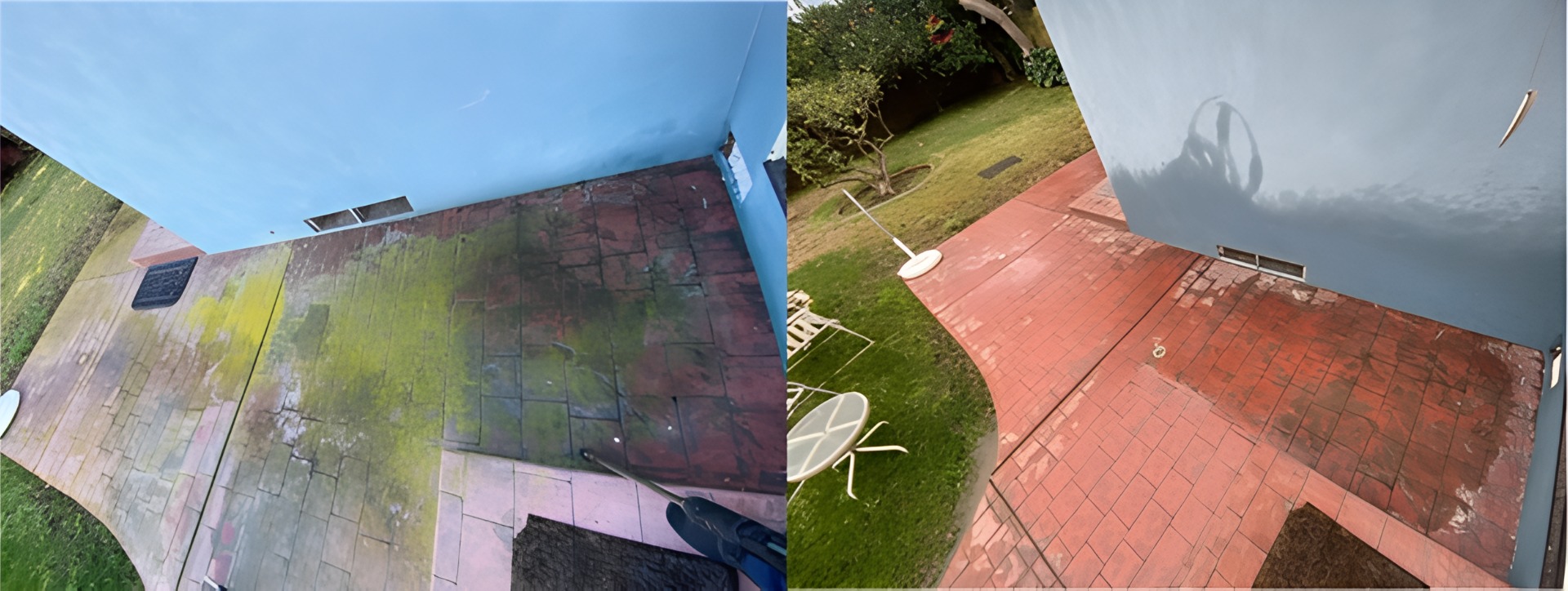
Interested in seeing the kind of results we aim for?
When to Schedule Power Washing in San Diego So Your Surfaces Stay Cleaner Longer
Timing can make your clean last longer—especially when your property gets a mix of sun-baked dust, shaded mildew, and north-facing grime that never seems to dry out. If you plan power washing in San Diego around how your exterior actually gets used, you’ll spend less time chasing repeat growth in damp corners.
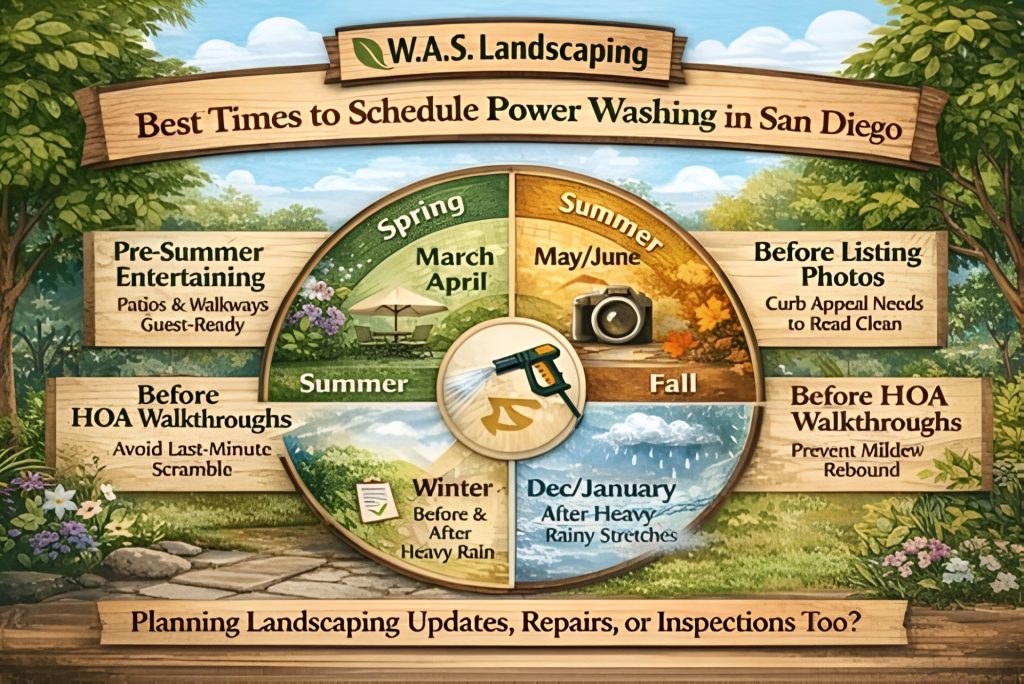
Best Times of Year and Why
Before pre-summer entertaining, so patios and walkways feel guest-ready. Ahead of listing photos, when curb appeal has to read clean on camera. Prior to and after rainy stretches, when mildew can rebound fast. And before HOA walkthroughs, so you’re not rushing at the last minute.
Note: Your HOA may have community rules about exterior appearance, water use, noise, and scheduling. It’s worth checking your CC&Rs before you book.
A Simple Maintenance Rhythm
High-traffic hardscapes often need touch-ups more often than the full exterior. If you’re working with a power washing company in San Diego, ask how they plan around the sun-side and shade-side of your home—not just your calendar.
For a smarter upkeep plan, bundle it with seasonal exterior maintenance so everything stays consistent.
Plan a Cleaner Exterior Without Guesswork or Surface Damage
You don’t have to gamble with pressure, surfaces, or surprise repairs just to get your property looking clean again. When the method matches the material, your concrete stays crisp, your stucco keeps its finish, and your outdoor spaces feel safer to walk on.
If you’re weighing power washing services in San Diego, we’ll help you choose a plan that fits your surfaces, your timeline, and the way your property is actually used.
Ready to Clean It Up Without Risking Stucco, Paint, or Pavers?
At W.A.S. Landscaping, we bring trained technique, careful prep, and a full-service property care mindset across San Diego and nearby communities—so the clean looks good and holds up.
Power washing should feel like a smart upgrade, not a risk. You can review our approach and options through our services page, then reach out when you’re ready.
Eager for a friendly discussion, a consult, or a surface-specific quote? Contact us, or call at 619-573-8314 and we’ll get right on your case (or lawn!).
Frequently Asked Questions
Is soft washing or pressure washing better for stucco homes in San Diego?
Soft washing is almost always the safer choice for stucco. Because stucco is porous and can crack or pit under high pressure, professionals typically recommend staying under 1,500 PSI with a wide-angle nozzle. Soft washing uses cleaning solutions at very low pressure—usually under 500 PSI—to dissolve mildew and algae without mechanical damage. In San Diego’s coastal climate, where marine layer moisture feeds organic growth on north-facing walls, the chemistry-first approach of soft washing tends to produce cleaner results that last longer.
How often should I schedule power washing for my San Diego home?
For most San Diego properties, once or twice a year is a good baseline. High-traffic hardscapes like driveways and pool decks may need attention every six months, while the full house exterior can often go a year between cleanings. Shaded areas with irrigation overspray may need more frequent soft washing to prevent algae from taking hold. The best approach is to time cleanings around specific triggers: before summer entertaining, before listing photos, or after a rainy stretch when mildew rebounds.
Can power washing damage my pavers or driveway?
Yes, if the wrong PSI or nozzle is used. The Interlocking Concrete Pavement Institute notes that pressure above 1,500 PSI risks surface damage and joint sand displacement on pavers. For concrete driveways, the safe range is generally 1,800 to 3,000 PSI, but staying in one spot too long or using a pinpoint nozzle can still etch the surface. A 25- to 40-degree fan-tip nozzle spreads pressure more evenly and prevents gouging. After cleaning pavers, it’s good practice to reapply polymeric sand and consider resealing.
What are the runoff rules for pressure washing in San Diego?
San Diego Municipal Code §43.0304 makes it illegal to discharge polluted wash water into the storm drain system. Penalties can reach $10,000 per day per incident. Professional contractors are expected to control, contain, and capture all wash water—using berms, vacuum recovery, or directing runoff onto landscaped areas that can absorb it without contamination. Proper disposal typically means routing water into the sanitary sewer system through an on-site connection, not letting it flow into street gutters.
What’s the difference between power washing and pressure washing?
Many contractors use the terms interchangeably. Technically, power washing uses heated water while pressure washing uses unheated water at high pressure. In practice, most residential work in San Diego is done with standard (unheated) pressure washers or soft wash systems. The more important distinction for homeowners is whether the crew is using high-pressure techniques or a soft wash approach—because that’s what determines whether your surfaces stay safe.
Is it worth hiring a professional, or can I rent a pressure washer and do it myself?
You can rent a pressure washer for about $50 to $100 per day, but the risk of surface damage is real if you’re not experienced with nozzle selection, PSI adjustment, and chemical application. Professionals bring calibrated equipment, surface-specific knowledge, and runoff management that keeps you compliant with San Diego’s stormwater regulations. For straightforward flat concrete, DIY can work if you’re careful. For stucco, roofs, painted surfaces, or pavers, the cost of professional service is usually far less than fixing damage from the wrong approach.