After a couple of hot weeks, any lush San Diego yard can go from “pretty okay” to bare spots, muddy edges, and runoff that makes your walkway look like a mini river. And if the decorative stone you laid last spring starts migrating into the path? Congrats, you’ve got the HOA side-eye starter kit. That’s exactly why more homeowners are turning to rock landscaping — not as a shortcut, but as a smarter foundation for a yard that actually holds up in this climate.
If you want a yard that looks designed without constantly chasing water and repairs, xeriscaping is one of the smartest directions to take. The term comes from the Greek xeros (“dry”) and refers to a water-wise approach to landscape design using drought-tolerant plants, efficient irrigation, and materials like stone—so your yard stays attractive with far less water. According to the San Diego County Water Authority, water-smart landscapes can cut outdoor water use by up to 70% through a combination of plant selection and irrigation upgrades.
At W.A.S. Landscaping, we see xeriscaping work best when it’s planned like a real layout—not a quick swap. Up next, we’ll walk through rock landscaping ideas that look intentional, how to pick the right materials, what xeriscaping plants pair well with stone, what costs tend to look like locally, and how rebates can offset a meaningful share of the investment.
Why Rock Landscaping Works So Well in San Diego
San Diego isn’t just dealing with “summer.” It’s dealing with year-round water restrictions, bright sun that bakes exposed soil, and runoff that shows up fast when rain hits a sun-hardened slope. The City of San Diego enforces mandatory water conservation regulations that limit irrigation to before 10 a.m. or after 6 p.m.—and rock landscaping is designed from the ground up to work within those rules.
Done right, rock landscaping gives you cleaner zones that don’t depend on thirsty turf to look finished. It lowers weekly upkeep, controls runoff when grading and drainage are planned into the layout, and creates more predictable maintenance once edging and borders are set.
When Heat and Sun Keep Stressing Turf
Coastal areas stay milder, but inland neighborhoods like Mira Mesa and Tierrasanta can hold heat for hours. Material choice matters: lighter stone reduces heat buildup, while darker rock holds warmth longer. Glare can also be a factor on bright days—something to think about if your main bed faces south or west.
Runoff, Clay Pockets, and Weeds: The Real Problems
Much of San Diego has clay-heavy soil that compacts easily and drains poorly, which means water pools in odd places and erodes others. The UC Division of Agriculture and Natural Resources recommends amending clay soil with compost to improve structure and water-holding capacity. That’s where low maintenance river rock landscaping holds up best—especially with steel edging that keeps stone from drifting and cuts weed pressure along borders.
The Xeriscape Sweet Spot: Clean Structure + Soft Planting
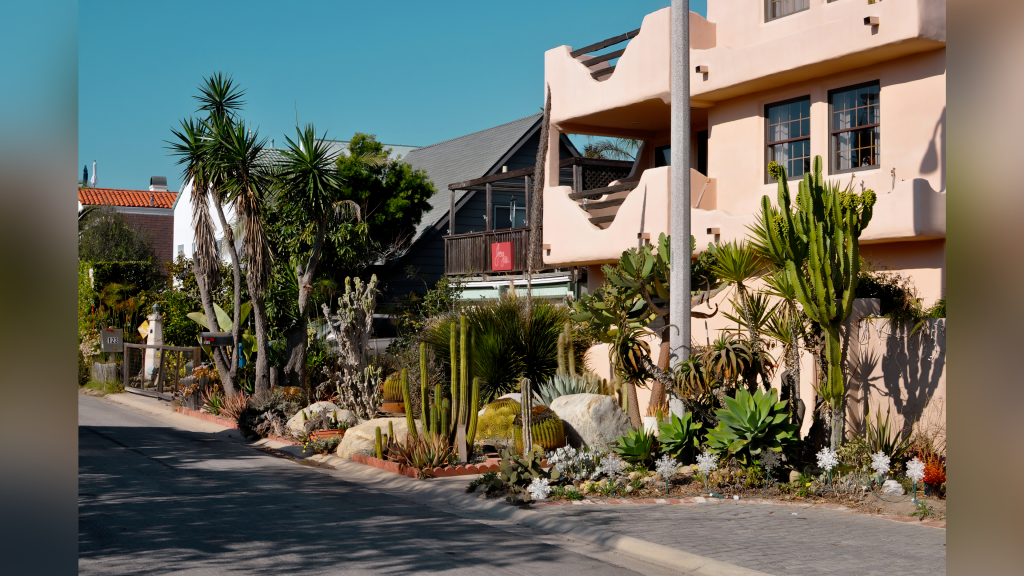
Contrary to one of the most common misconceptions, xeriscaping doesn’t have to mean a barren desert yard. With the right mix of rock, mulch, and plants, your space can still feel soft, colorful, and lived-in—just with a lot less water stress.
Most projects start by removing thirsty lawn sections, then rebuilding the layout with defined zones: rock for structure, mulch where roots need cooler soil, and plant pockets that look intentional. We keep watering realistic by grouping plants with similar needs (hydrozoning) and using drip irrigation to target roots instead of soaking the whole bed. In areas like North Park and Carmel Valley, that balance matters.
For those considering rock and mulch landscaping ideas, the key is separation: steel edging keeps stone from creeping into mulch zones, and it cuts down on weed pressure at the seams. Use rock for high-visibility borders and pathways, and mulch in planting beds where roots need moisture retention and cooler soil temperatures.
Rock Landscaping Ideas That Actually Look Good Here
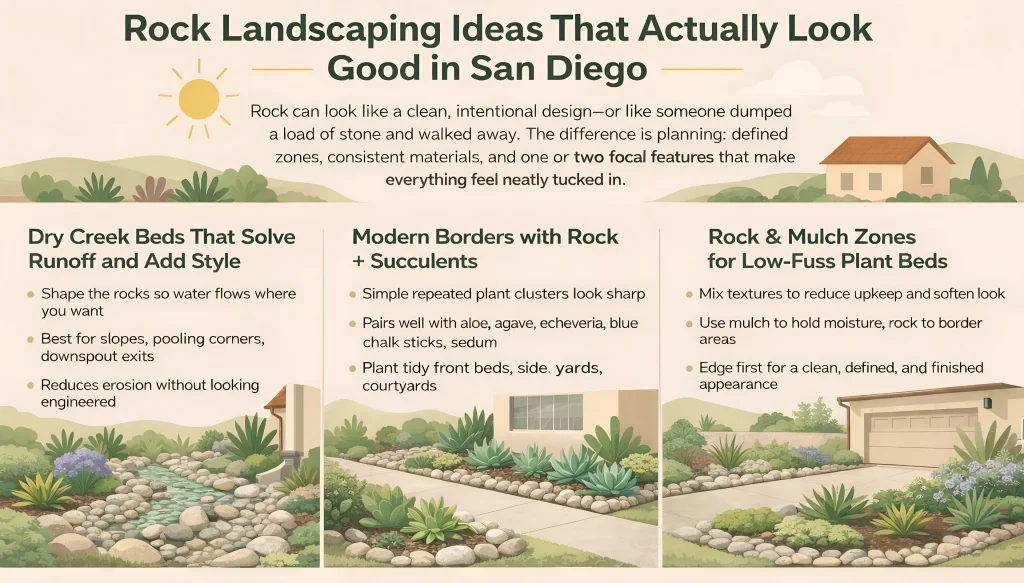
Rock can look like a clean, intentional design—or like someone dumped a load of stone and walked away. The difference is planning: defined zones, consistent materials, and one or two focal features that make everything feel neatly tucked in.
Dry Creek Beds That Solve Runoff and Add Style
A dry creek bed is a smart fix for storm runoff that keeps showing up in the same places. With river rock landscaping, you can guide water away from walkways and foundations while adding a feature that looks purposeful year-round. Shape the rocks so water flows where you want it, especially near downspouts. Best for slopes, pooling corners, and downspout exit points—and it reduces erosion without looking engineered. This is also one of the most effective large rock landscaping ideas for yards with grade changes.
Modern Borders with Rock + Succulents
For a clean, contemporary feel, keep the layout simple and repeat the same plant clusters along tight edges. Modern river rock landscaping pairs well with succulents that thrive here—aloe, agave, echeveria, blue chalk sticks, and sedum. The contrast looks especially sharp against warm stucco and minimal hardscape lines. Best for tidy front beds, side yards, and courtyards.
Rock & Mulch Zones for Low-Fuss Plant Beds
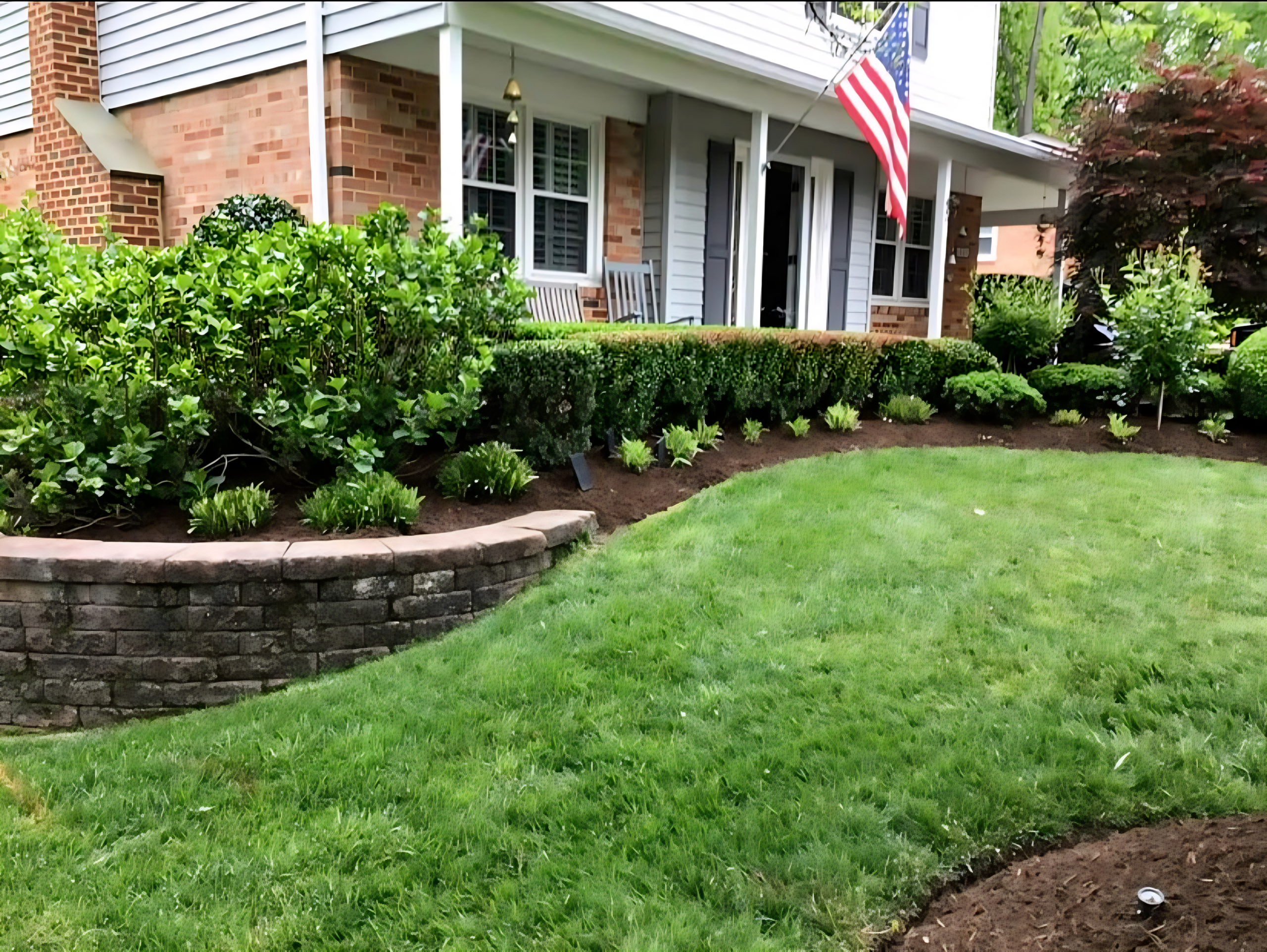
If you want low upkeep without making the yard feel harsh, mix textures. Rock and mulch landscaping works when mulch protects plant roots and rock defines clean borders. Edge first, then place the rock—it’s the detail that keeps everything from drifting and gives the layout a professional finish.
Front Yards That Feel Finessed, Not Empty
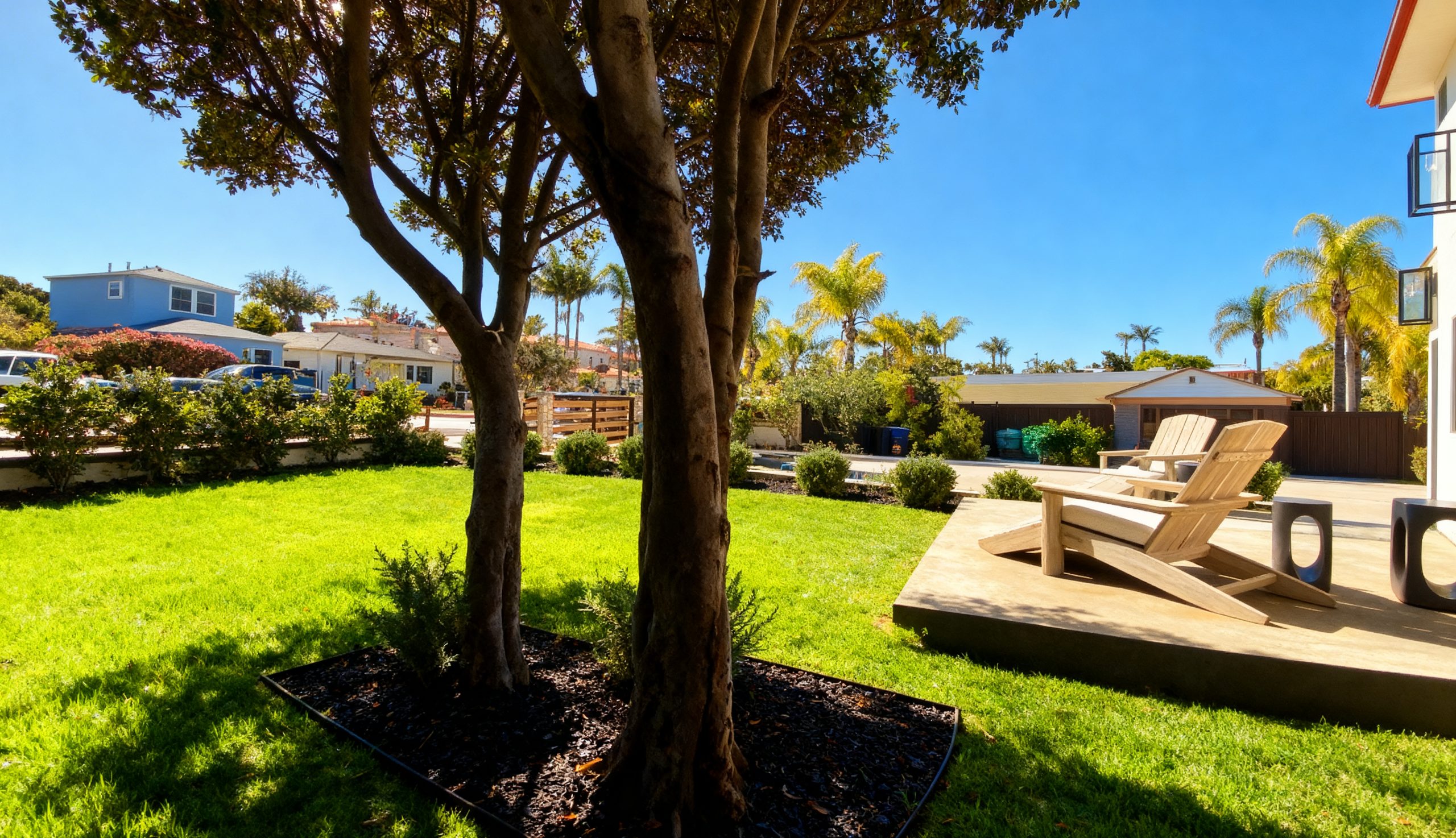
Front yards need curb appeal that feels intentional, especially near HOAs. With front house river rock landscaping, you can frame the walk-up path, create a focal point, and keep beds looking neat without constant trimming. The best xeriscaping ideas for front yards land when you choose one hero feature—a boulder grouping, a specimen agave, or a dry creek accent—and keep the rest simple and repeated.
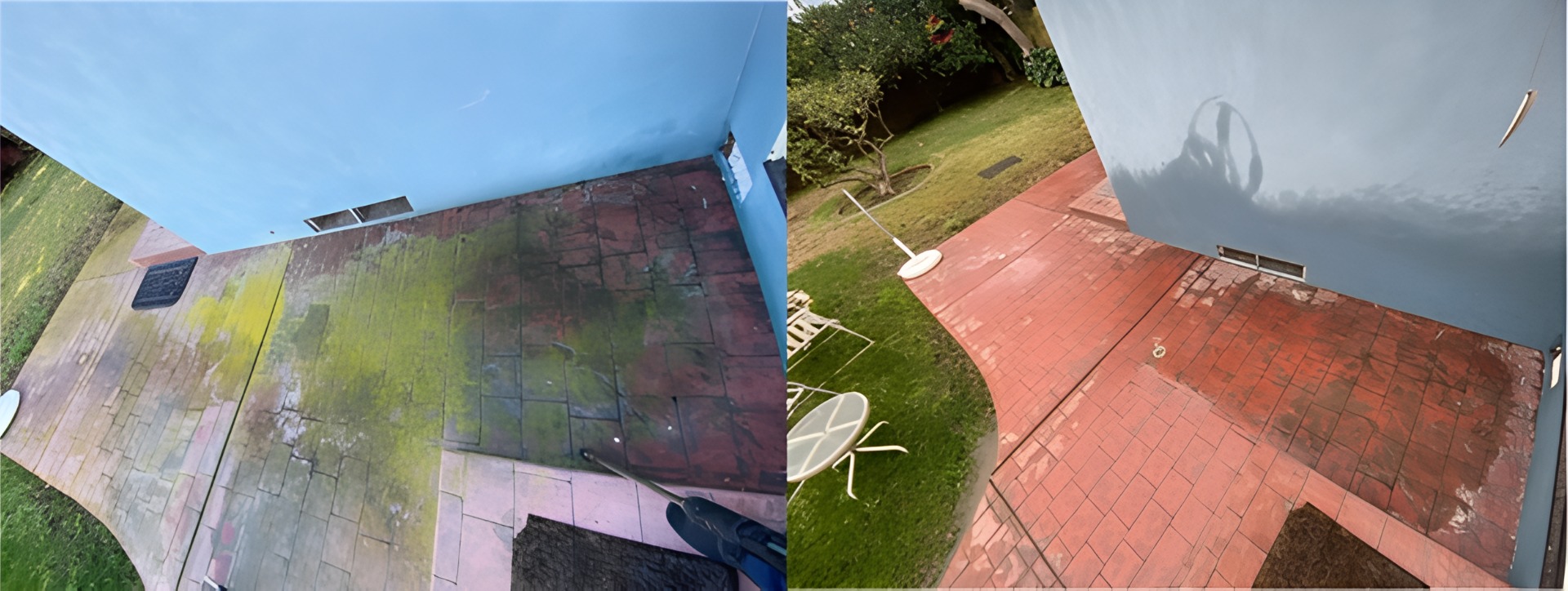
If you’re curious about how these approaches play out in real San Diego yards, ask to see xeriscaping examples from our before-and-after projects around University City and Carmel Valley.
Choosing the Right Landscaping Rock for San Diego
The best material depends on how you’ll actually use the space. You’re not just picking what looks nice—you’re deciding what stays put, what feels comfortable underfoot, and what won’t turn into a maintenance headache after the first windy week. When comparing landscaping rock options, lead with function first, then finish with style.
| Material | Best For | Pros | Watch Out For |
| River rock | Dry creek beds, accents, decorative borders | Natural look, good drainage, low maintenance | Rolls underfoot in walkways; needs edging |
| Decomposed granite | Patios, paths, flat gathering areas | Compacts well, walkable, affordable | Needs re-compaction over time; requires edging |
| Crushed rock | High-traffic zones, slopes, driveways | Angular pieces lock together for stability | Less decorative; rougher underfoot |
| Boulders | Focal points, retaining features, slope anchors | Dramatic presence, permanent, low-maintenance | Needs safe placement and solid base; heavy equipment |
| Flagstone | Stepping paths, patio surfaces | Flat and stable, natural aesthetic | Can be slippery when wet; more expensive |
Good river rock landscaping comes down to prep: a compacted base, clean edging, and (when needed) geotextile fabric for separation. That’s how you land on landscaping rock ideas that hold up in San Diego heat and glare.
Xeriscaping Plants That Pair Well with Rock
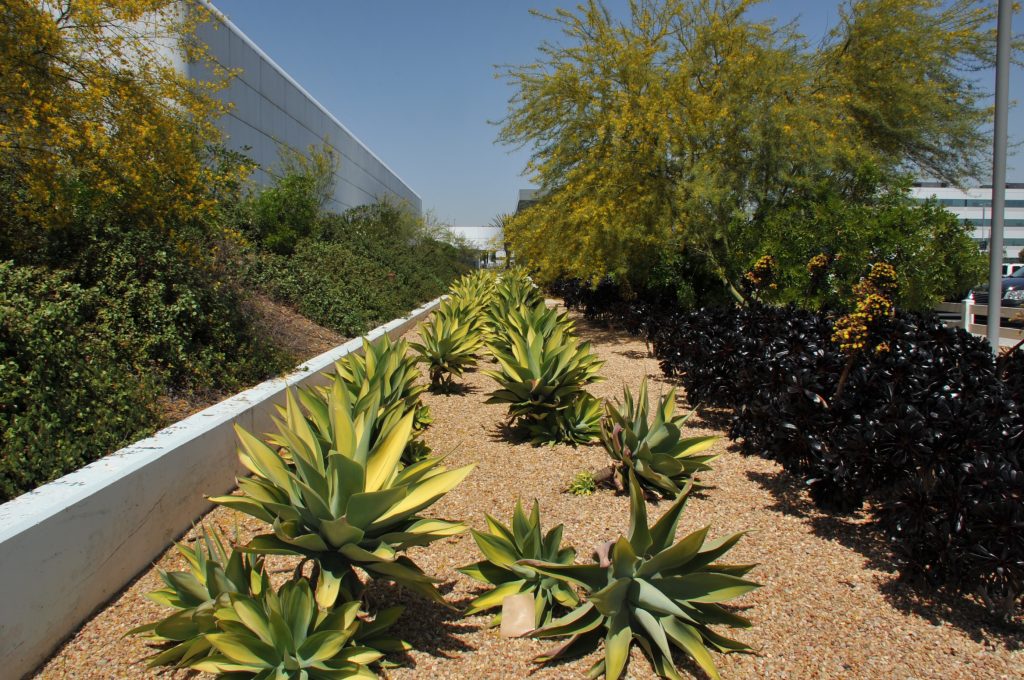
Rock gives you the structure, but plants are what keep a low-water yard from feeling flat or harsh. The easiest way to make it look intentional is to group xeriscaping plants by what they do in the design, then repeat a few winners across the space.
| Plant | Design Role | Water Needs | Key Features | Best Placement |
| Agave | Structure / focal point | Very low | Sculptural form, dramatic presence | Focal points, rock gardens, entry features |
| Cleveland Sage | Softness / fill | Low | Aromatic foliage, lavender flowers, hummingbird magnet | Mid-bed plantings, pollinator zones, fragrant gardens |
| California Lilac | Structure / screening | Very low | Blue/purple spring blooms, evergreen | Slopes, habitat gardens, background screening |
| Manzanita | Year-round structure | Very low | Smooth red bark, white flowers, evergreen | Wildlife areas, accent specimen, fire-resistant zones |
| Red Yucca | Vertical accent | Very low | Coral flower spikes, grass-like form | Borders, rock beds, paired with boulders |
| Deer Grass | Softness / movement | Low | Soft plumes, graceful movement | Mass plantings, pathway edges, transition zones |
| Dymondia | Groundcover / polish | Low | Silvery foliage, yellow flowers, handles light foot traffic | Between pavers, lawn replacement, border edging |
| Lantana | Groundcover / color | Low | Vibrant blooms, butterfly magnet, fast spreading | Slopes, mass color, low bank coverage |
Plant selections informed by the California Native Plant Society and the UC Master Gardeners of San Diego County.
Coastal yards often handle more softness and salt-tolerant picks, while inland spots need tougher choices for full-sun corners and hot reflected heat near stucco walls. That’s why good rock garden landscaping focuses on plant zones—not random drought plants scattered everywhere. Group plants with similar water needs (hydrozoning) so you’re not overwatering half the bed to keep one thirsty plant alive.
Once your plants are in place, efficient watering keeps them consistent without waste. A simple drip system makes a big difference in full-sun beds. Our drip irrigation installation team can help you set it up right.
What Rock Landscaping Costs in San Diego
Costs swing most based on prep work and access—not just the stone you choose. A clean-looking yard still needs turf removal, a stable base, and borders that keep materials from drifting into walkways.
What Usually Affects Local Prices
The biggest cost drivers include demolition and disposal (removing turf, old mulch, or failing hardscape), delivery and labor (stone is heavy and placement takes time), base prep (compaction, grading, and drainage fixes—especially on slopes), edging and borders (the detail that keeps rock from migrating), irrigation changes (switching zones or converting to drip), and the material mix (how much of the project is plant-heavy vs hardscape-heavy).
| What You’re Paying For | Typical Range | Why It Varies |
| Base prep + grading | $1–$3 / sq ft | Slope, drainage fixes, access, soil issues |
| Rock material + placement | $2–$7 / sq ft | Rock type, depth, hauling distance, labor time |
| DG or compacted path zones | $4–$10 / sq ft | Thickness, edging quality, compaction |
| Small yard conversion | $3,000–$8,000 | Simple layout vs heavy prep + features |
| Medium yard conversion | $8,000–$18,000 | More demo, more edging, more irrigation work |
| Large yard conversion | $18,000–$40,000+ | Slopes, drainage, boulders, hardscape mix |
Sources: Homewyse, San Diego County Water Authority
Where Rebates Can Change the Math
If your project involves replacing lawn, rebates may offset a significant share of the work. The San Diego County Water Authority notes that turf replacement rebates currently start at $2 per square foot through the Metropolitan Water District’s SoCal Water$mart program, with participating agencies adding up to $1 more for a total of up to $3 per square foot. There’s also an additional $100 per tree rebate for up to five trees planted as part of a turf replacement project. Funds are limited and amounts can change, so confirm current eligibility before starting work.
Important: you must apply and receive approval before removing any turf. The program requires a minimum of 250 square feet of removal, at least three plants per 100 square feet, overhead sprinkler conversion, and a stormwater retention feature like a rain garden or dry creek bed.
For a surface-specific estimate, request a free quote.
DIY or Pro? What’s Worth Doing Yourself (and What Can Backfire Fast)
Some parts of a rock-and-plant redesign are genuinely DIY-friendly, especially when the yard is flat and you’re working in small zones. Swapping out tired mulch, refreshing a planting bed, or adding a small DG path can look great without turning into a full construction project.
DIY usually works best for small accent beds and simple rock refreshes, light material swaps in contained areas, and straightforward paths where drainage isn’t changing. But the expensive mistakes tend to show up when water and weight enter the picture: slopes need grading that directs runoff correctly, drainage fixes can’t be guessed, large boulders must be stable and safely placed, and edging systems matter more than people expect.
A solid xeriscaping service also accounts for irrigation zones—because watering the wrong area is how low-water yards still waste water. If you’re searching for xeriscaping near me and want it to look intentional long-term, it often helps to bring in pros for the planning and base prep.
W.A.S. Landscaping can handle the heavy lifting and layout details, from professional rock landscaping services to custom garden features and seasonal landscaping maintenance.
Let’s Build a Low-Water Yard You’re Proud to Come Home To
A low-water yard shouldn’t feel bare or unfinished. With smart xeriscaping, we can help you get clean structure, stronger curb appeal, and less stress during hot stretches—without guessing at drainage, edging, or plant spacing.
W.A.S. Landscaping installs low maintenance river rock landscaping across San Diego and nearby areas like Clairemont, Mira Mesa, Point Loma, University City, and Carmel Valley, so your yard looks intentional from day one.
Call 619-573-8314 and let’s talk through your yard—then we’ll put together a clear, no-pressure service estimate.
Frequently Asked Questions
What is xeriscaping?
Xeriscaping (from the Greek xeros, meaning “dry”) is a landscape design approach that dramatically reduces the need for supplemental watering. It combines drought-tolerant plants, efficient irrigation like drip systems, strategic mulching, and materials like rock and gravel to create outdoor spaces that stay attractive with minimal water. It originated in the western United States as a response to water scarcity and has become a standard practice across Southern California. A xeriscape doesn’t have to be barren or cactus-only—modern designs can be lush, colorful, and full of texture.
How much does rock landscaping cost per square foot in San Diego?
Rock material and placement typically runs $2 to $7 per square foot, depending on the type of stone, depth of coverage, and labor involved. When you add base prep, grading, edging, and irrigation changes, a full yard conversion can range from $3,000 for a small project to $40,000 or more for a large property with slopes and boulders. Getting multiple quotes that break out each line item helps you compare accurately.
Is xeriscaping just rocks and cacti?
No—that’s the most common misconception. Modern xeriscaping incorporates a wide variety of plants, including California natives like Cleveland sage, California lilac, and manzanita, along with ornamental grasses, succulents, and flowering groundcovers. The goal is a layered design with structure, softness, and color that happens to need far less water than a traditional lawn.
What turf replacement rebates are available in San Diego?
Through the SoCal Water$mart program administered by the Metropolitan Water District, San Diego County residents can receive at least $2 per square foot for replacing turf with drought-tolerant landscaping. Participating local water agencies may add up to $1 more, bringing the total to $3 per square foot for up to 5,000 square feet per year. The County of San Diego’s Waterscape Rebate Program may offer additional incentives of $3 to $5 per square foot for residents in unincorporated areas. You must apply and receive approval before starting work, and your project must include plants, irrigation changes, and a stormwater retention feature.
What are the best drought-tolerant plants for San Diego rock gardens?
The strongest performers for San Diego conditions include agave and aloe for bold, sculptural structure; Cleveland sage and lavender for fragrance and pollinator appeal; California lilac for spring color and screening; deer grass for soft movement and texture; and dymondia or lantana for low, tidy groundcover. The California Native Plant Society and UC Master Gardeners of San Diego County are excellent resources for region-specific guidance. Group plants by water needs (hydrozoning) so your drip system can target each zone efficiently.
Can I do xeriscaping myself, or should I hire a professional?
Small projects—refreshing a planting bed, adding a DG path in a flat area, or swapping mulch for rock in a contained zone—are good DIY candidates. But anything involving slopes, drainage changes, large boulders, or irrigation conversion is where professional help pays for itself. Mistakes with grading and runoff can damage foundations, and improperly placed boulders near walkways are a safety concern. A pro also helps you navigate the rebate application process, which has specific requirements that must be met before any turf is removed.